
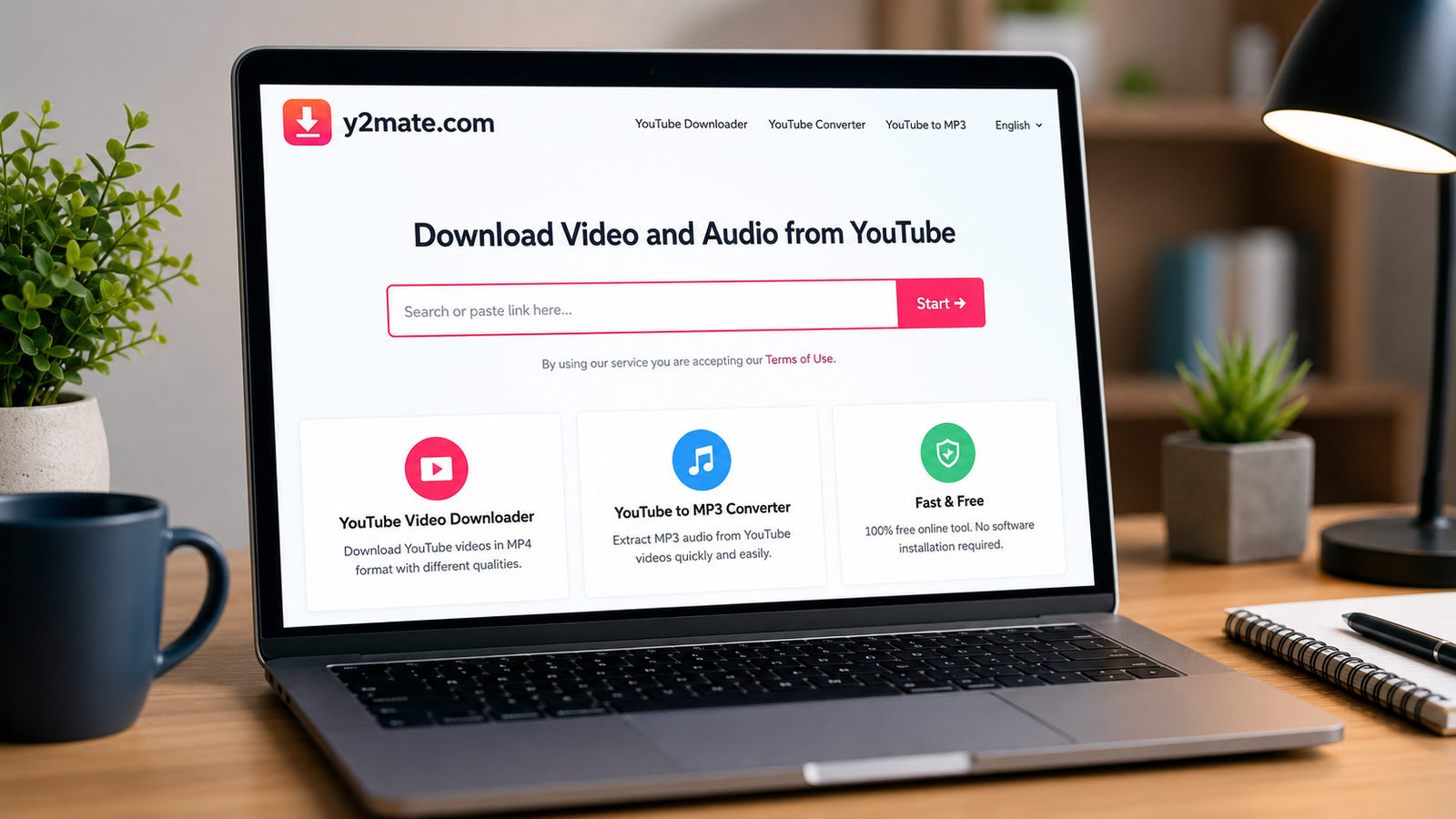
y2mate com is a web-based media conversion and downloading service that many internet users recognize for its simple approach to converting online video or audio into downloadable files. Instead of requiring a traditional desktop application, services in this category generally work through a browser, allowing users to enter a supported media URL and select an available output format.
For casual internet users, the appeal is easy to understand. A browser-based tool can be quicker to access than installing software, and the interface is often designed around a straightforward URL-and-format workflow. However, there are also important questions surrounding privacy, advertising, file quality, security, and copyright.
This guide explains what Y2Mate is, how the process generally works, what features users may encounter, and what to consider before downloading or converting online content.
What Is y2mate com?
Y2Mate is commonly associated with online video and audio conversion. The basic concept is simple: a user provides the URL of online content, and the service processes that address to present available download or conversion options.
Unlike conventional media software, a browser-based service does not necessarily require users to install a dedicated application. This makes the concept particularly attractive to people who only occasionally need to convert online media.
Depending on the service and the source platform, available options can vary. Users may encounter choices involving different file formats, resolutions, or audio-only outputs.
It is important to understand that the availability of a particular download does not automatically mean the content is free to copy or redistribute. Copyright rules and the terms of the original platform still matter.
How Does Y2Mate Work?
The basic workflow behind services such as Y2Mate is relatively straightforward.
A typical process involves several stages:
- Copy a supported media URL.
- Open the conversion website in a browser.
- Paste the URL into the provided field.
- Allow the service to process the address.
- Review the available output options.
- Choose an appropriate format or quality level.
- Start the conversion or download.
The technical work happens behind the scenes. The service identifies information associated with the submitted URL and attempts to prepare the requested media in a downloadable format.
The exact process can differ depending on the source website, the media type, and changes made to the conversion service.
Understanding the Conversion Process
When a user submits a URL, a conversion service generally needs to retrieve or process the media associated with that address.
The resulting file may then be prepared in a different format.
For example, a video can potentially be offered as:
- A video file with different quality levels
- An audio-only file
- Different container formats
- Smaller files designed for easier storage or sharing
The conversion process can involve several technical steps, including retrieving media data, processing streams, encoding them into a selected format, and making the resulting file available to the user.
The time required can depend on the size and quality of the original content, server workload, connection speed, and other technical factors.
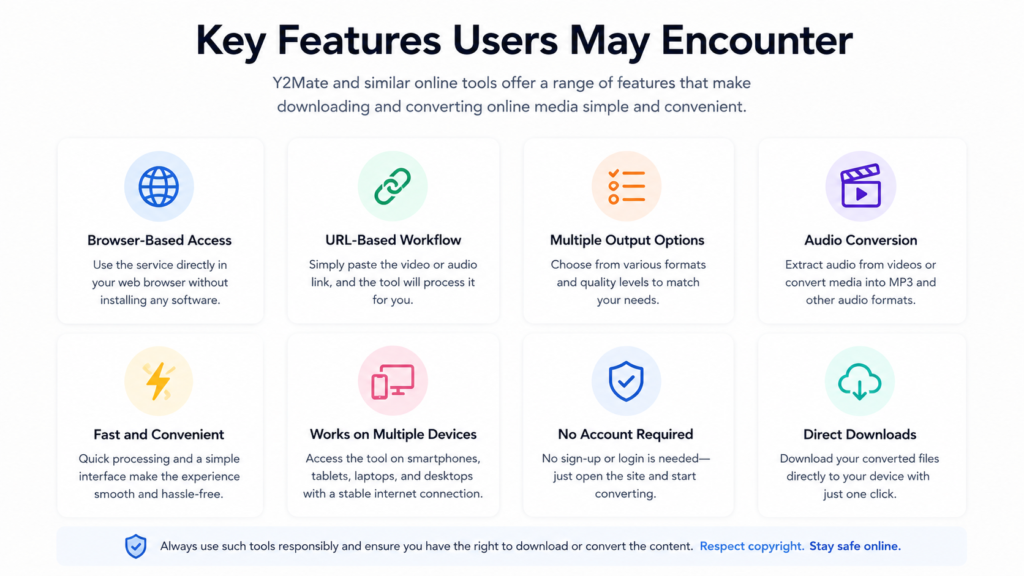
Key Features Users May Encounter
One reason online converters remain popular is their simple interface. People generally want to complete a basic task without learning complicated software.
Common characteristics associated with these services include:
Browser-Based Access
A major attraction is the ability to use a browser rather than install a dedicated program.
This can be convenient for users working from different computers or devices.
URL-Based Workflow
The basic process revolves around a media URL. Users do not normally need to search through complicated menus before beginning.
Multiple Output Options
Depending on the source and service availability, users may be presented with several format or quality choices.
This can help users balance file size and media quality.
Audio Conversion
Some online conversion services provide options for extracting or converting the audio portion of a video.
This can be useful when users have the necessary rights to work with the original content.
Simple Interface
These websites are generally designed for quick tasks. A simple input box and format selection can make the process understandable even for less experienced internet users.
Y2Mate and Different File Formats
File format is an important consideration when converting online media.
Different formats have different purposes, compatibility levels, and file-size characteristics.
| Format Type | Common Use | Main Consideration |
|---|---|---|
| MP4 | Video playback | Broad compatibility |
| MP3 | Audio playback | Audio-only output |
| WebM | Web-focused media | Compatibility varies |
| Other formats | Specialized playback or editing | Device support should be checked |
The best option depends on what the downloaded file will be used for.
For example, someone who simply wants to watch a compatible video may prefer a widely supported video format. Someone working with audio may need an audio-specific format instead.
Choosing the highest available quality is not always necessary. Higher-quality files can consume substantially more storage space.
Why Do People Use Online Video Converters?
There are several reasons internet users are interested in browser-based conversion tools.
Convenience is one of the biggest factors. Installing dedicated software can seem unnecessary for someone who only needs to process a single file occasionally.
Another reason is accessibility. A web-based tool can potentially be used across different operating systems as long as the browser and service are supported.
Users may also want to:
- Save media they are legally permitted to download
- Convert their own uploaded videos
- Prepare content for offline personal use where permitted
- Extract audio from their own recordings
- Convert compatible files into another format
- Reduce file sizes for storage
However, the legality of downloading material varies according to the content, copyright status, platform rules, and local laws.
Is Y2Mate Safe to Use?
Safety deserves careful attention when using any unfamiliar online conversion website.
The biggest issue is not necessarily the conversion technology itself. Instead, users should be cautious about advertisements, redirects, deceptive buttons, browser notifications, and unexpected downloads that can sometimes appear on free conversion websites.
Before downloading anything, users should check what they are actually clicking.
Useful safety practices include:
- Keep your browser and operating system updated.
- Avoid downloading unfamiliar executable files.
- Do not install browser extensions simply because a website recommends them.
- Be cautious if a page unexpectedly redirects you.
- Never enter passwords or sensitive personal information into a conversion page.
- Use reputable security software.
- Check the downloaded file before opening it.
- Avoid allowing unnecessary browser notifications.
A legitimate-looking download button does not guarantee that the resulting file is safe.
Privacy Considerations
Privacy is another factor worth considering.
Whenever users interact with an online service, certain technical information may potentially be processed, depending on the site’s infrastructure and privacy practices.
Users should therefore avoid submitting sensitive or private URLs to unfamiliar conversion websites.
It is also wise to review a service’s privacy policy before using it regularly.
For ordinary public media, privacy concerns may be relatively limited. But private videos, personal recordings, unpublished material, or links containing sensitive information should receive much more careful treatment.
Copyright and Responsible Use
Perhaps the most important issue surrounding online downloaders is copyright.
Not every video or audio file available online is free to download, copy, modify, or redistribute.
Copyright owners can place restrictions on how their work is reproduced or distributed. In addition, individual platforms may have their own terms governing downloads and offline access.
A safer approach is to use conversion tools only with content that you have permission to download or content that is otherwise legally available for that purpose.
Examples can include:
- Your own videos
- Public-domain material
- Content released under an appropriate license
- Media for which you have explicit permission
- Material offered through an official download function
Users should not assume that publicly viewable content automatically becomes free to copy.
Common Problems Users May Experience
Online converters can sometimes stop working correctly. This does not necessarily mean that a user’s device is defective.
One common issue is unsupported URLs. Online platforms frequently change their technical systems, which can affect third-party conversion services.
Another issue is slow processing. Large files and high-resolution media require more processing and bandwidth.
Users may also encounter:
- Failed conversions
- Missing format options
- Low-quality output
- Broken download buttons
- Unexpected redirects
- Browser compatibility problems
- Temporary service outages
When a converter fails, repeatedly clicking suspicious buttons is rarely a good solution.
Instead, users should check whether the source is supported, refresh the page, verify their connection, or use an official download option provided by the original platform.
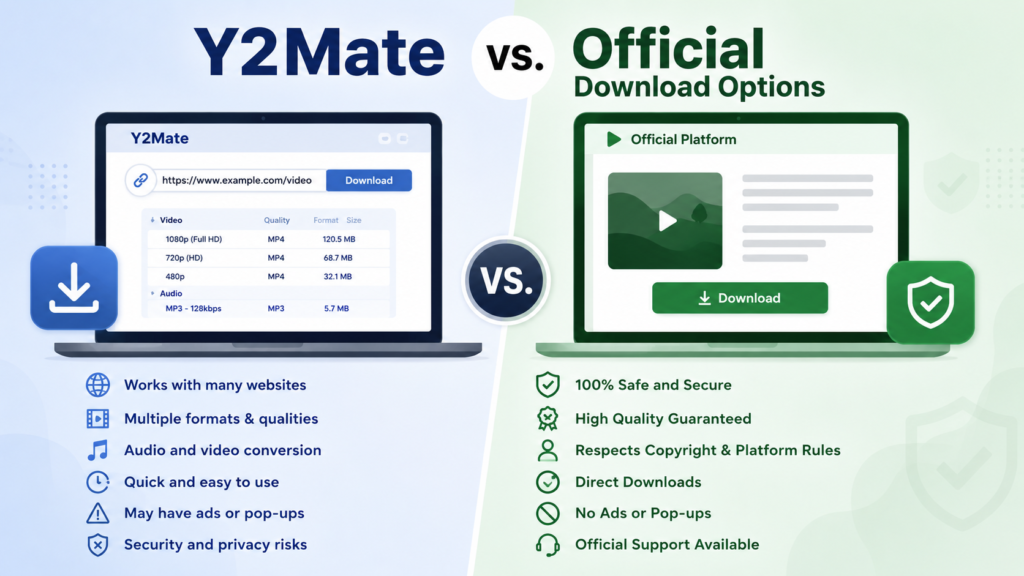
Y2Mate vs. Official Download Options
A third-party converter and an official platform download feature serve different purposes.
Official download systems are generally preferable when they are available because they are provided directly by the platform and operate according to its rules.
Third-party services may offer more flexibility, but that flexibility can come with additional privacy, security, compatibility, and copyright considerations.
For general users, the following approach makes sense:
- Official download available: Prefer it.
- Your own content: Conversion may be reasonable when permitted.
- Licensed/public-domain content: Check the license before downloading.
- Copyrighted third-party content: Obtain permission or use the platform’s authorized options.
This approach reduces unnecessary risks while still allowing legitimate conversion tasks.
Tips for a Better and Safer Experience
If you decide to use an online converter for content you are authorized to download, a few habits can make the experience safer.
First, double-check the website address before interacting with it. Search results can sometimes contain similarly named domains.
Second, avoid clicking multiple buttons simply because the first one did not work. Advertising pages can sometimes imitate download controls.
Third, think about the output quality you actually need. A smaller file may be sufficient for casual use and can save storage space.
Finally, scan unfamiliar downloads before opening them, particularly when the file type is unexpected.
Frequently Asked Questions
What is y2mate com used for?
Y2Mate is associated with browser-based online media conversion and downloading. Users typically provide a supported media URL and may receive options for downloading or converting the associated content.
Does Y2Mate require software installation?
The basic concept of a web-based converter is that it operates through a browser rather than requiring traditional desktop software. However, users should be cautious about websites that unexpectedly request extensions or additional programs.
Can online converters download every video?
No. Compatibility can vary considerably. Changes to source platforms, restricted content, technical limitations, and service updates can affect whether a particular URL can be processed.
Is downloading online videos legal?
It depends on the content, copyright status, permission granted by the copyright owner, applicable law, and the rules of the platform hosting the content. Users should download only material they are legally permitted to copy.
Why does a conversion sometimes fail?
A conversion may fail because the source URL is unsupported, the original platform has changed its technology, the service is temporarily unavailable, or the requested format is not supported.
How can I stay safer when using an online converter?
Keep your browser updated, avoid suspicious redirects and downloads, do not provide sensitive information, check downloaded files before opening them, and prefer official download options whenever they are available.
Final Thoughts
Y2Mate represents a broader category of browser-based tools designed to make online media conversion more accessible. Its basic appeal comes from a simple URL-based workflow that can eliminate the need for traditional conversion software for certain legitimate tasks.
However, convenience should not come at the expense of security, privacy, or responsible media use. Users should understand what they are downloading, check the legality of copying the material, and remain cautious around advertisements, redirects, and unexpected files.
For people who need to convert their own media or content they are authorized to use, an online converter can be a convenient option. For copyrighted third-party material, official platform features and properly licensed sources are generally the safer choice.
Also Read: ChatGPT: What It Is, How It Works, and How Beginners Can Use It







Leave a Reply